

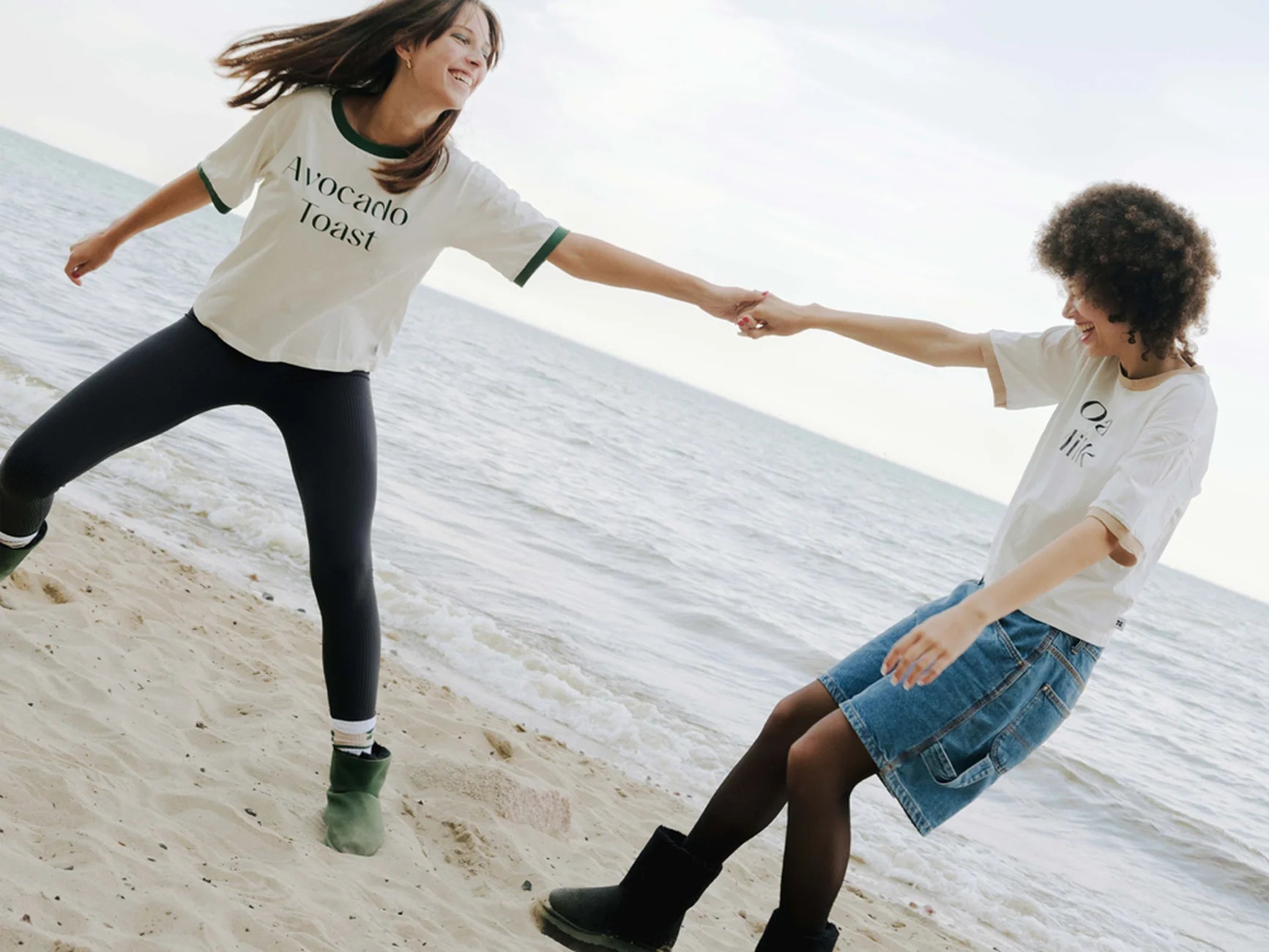



There’s a quiet revolution happening in fashion - and the leaders aren’t luxury houses or trend forecasters.
They’re Millennials, Gen Z, and the first wave of Gen Alpha.
For these generations, veganism isn’t a protest sign.
It isn’t a manifesto.
It isn’t even something they think twice about.
For them, choosing vegan is simply… normal.
A natural extension of living with intention, empathy, and awareness.
From “activism” to everyday choice
Just a decade ago, vegan products were seen as niche, alternative, or “for the few.”
Today, ethical and cruelty-free options are not just welcomed - they’re expected.
Young consumers don’t buy only for style anymore. They buy for:
-
transparency
-
environmental responsibility
-
animal welfare
-
low-impact materials
-
ethical production
-
brands that mean something
It’s no longer about making a statement.
It’s simply how they prefer to live.
Why Gen Z and Alpha see veganism differently
They grew up in the era of climate reality
Climate change isn’t a theory for them - it’s part of their daily vocabulary.
From TikTok explainers to school discussions, they’ve been surrounded by conversations about sustainability since childhood.
Environmental responsibility feels less like a “choice” and more like common sense.
Animal suffering is impossible to ignore
Unlike older generations, Gen Z and Alpha have never lived in a world where the truth could be easily hidden.
Videos from farms, investigations, behind-the-scenes footage - one swipe on social media shows more transparency than traditional industries ever wanted to reveal.
If something harms animals, they ask a simple question: Why should harming be required at all?
And if there’s a kinder option, they choose it.
They expect brands to act, not just advertise
For younger buyers, purchasing a product is like voting.
They place trust - and money - in brands that align with their worldview.
That’s why they’re drawn to companies that focus on:
-
recycled and upcycled materials
-
cruelty-free products
-
vegan alternatives
-
circularity
-
honest communication
-
community-focused values
Brands that ignore these expectations don’t just feel outdated - they feel irrelevant.
Vegan fashion becomes the new standard
When empathy becomes standard, vegan fashion naturally follows.
To Millennials, Gen Z, and Alpha, vegan boots, bags, and clothing aren’t “alternatives.”
They are simply better-designed products that don’t cost the planet or animals anything.
Vegan fashion now stands for:
-
cleaner production
-
less waste
-
fewer emissions
-
cruelty-free design
-
modern, plant-based innovation
-
durability without compromise
It’s where style meets ethics - effortlessly.
Why fashion is leading this cultural shift
Fashion has always been one of the most powerful forms of self-expression.
And these generations use style not only to express who they are, but what they believe in.
Ethical choices feel authentic to them.
And authentic choices have become the core of their identity.
It’s no accident that brands prioritising sustainability have seen the fastest growth among Gen Z buyers.
And it’s no accident that vegan fashion is now mentioned in the same breath as innovation, creativity, and cultural relevance.
New Orchard: Created for this new generation
At New Orchard, this shift isn’t surprising - it’s what we were built for.
From day one, our mission was simple:
create beautiful things without harming animals or the planet.
A mission that resonates deeply with a generation who sees veganism as the most natural choice in the world.
That’s why our boots are:
-
cruelty-free
-
handcrafted in Italy
-
made from plant-based and upcycled materials
-
warm, durable, long-lasting
-
water-resistant and unisex
-
PETA-Approved Vegan
We believe that the future of fashion doesn’t come from tradition alone - it comes from values, innovation, and responsibility.
And this new generation recognises that instantly.
Beyond fashion: a mindset of responsibility
Younger consumers don’t separate vegan fashion from the rest of their lifestyle.
For them, it’s all connected:
-
the food they choose
-
the products they buy
-
the brands they support
-
the causes they care about
Ethical living isn’t a curated identity.
It’s a built-in expectation.
That’s why purchases that donate to animal shelters or environmental causes are so compelling to them.
It’s why circular programs, take-back schemes, and recycled materials feel exciting rather than “alternative.”
And it’s why cruelty-free boots aren’t seen as a compromise - they’re seen as the obvious option.
Why this matters for the future of fashion
The generations who treat vegan as normal will soon hold the majority of purchasing power.
Their habits will shape:
-
how products are made
-
what materials become mainstream
-
which brands survive
-
what luxury means
-
how fashion defines “quality”
And if there’s one thing they agree on, it’s this:
Fashion should not hurt animals.
Fashion should not damage the planet.
Fashion should evolve.
Vegan fashion - once viewed as radical - now simply feels like the future of good design.
Normal is powerful
And that’s the heart of it:
Vegan is no longer rebellious.
It’s responsible, stylish, expected and normal.
The new generation doesn’t need convincing.
They’re already living the future the rest of the world is slowly catching up to.
At New Orchard, we’re honoured to design for them - and with them - every step of the way.
A future where compassion is effortless.
Where innovation is the baseline.
Where fashion feels good in every sense.
Because when vegan becomes normal…
Fashion finally becomes what it was always meant to be: kind.
 By purchasing any of our green product, you spend 10% on pets.